Quartzite installation is a popular choice for homeowners seeking a natural stone that delivers both durability and striking visual appeal. Each slab features unique veining and color variation, creating a high-end, custom look for kitchens and bathrooms. Because of its density and hardness, quartzite requires precise handling and professional installation to achieve a flawless finish.
The installation process is more technical than many expect, making professional quartzite installation essential. Experts manage templating, slab placement, cutting, and seam alignment to ensure accuracy and long-term performance. This guide outlines what to expect so you understand how quartzite countertops are properly installed from start to finish.
Key Takeaways
- Choose quartzite based on color, pattern, and durability
- Proper preparation ensures a smooth installation process
- Fabrication requires precise cutting and measurement
- Installation involves careful handling and seam finishing
- Professional installers help ensure lasting quality and performance
Choosing the Right Quartzite Countertop for Your Space
Selecting the right quartzite countertop is about more than appearance; it requires balancing style, performance, and how the stone will function in your specific space. Quartzite is valued for its natural beauty, durability, and resistance to heat and scratches, making it a strong option for kitchens and bathrooms alike. The growing popularity of natural materials also reflects current kitchen design trends, with the National Kitchen & Bath Association reporting that natural quartzite continues to rank among the most popular countertop materials for new kitchens.
Because lighting, thickness, and slab variation can significantly impact the final look and performance, professionals often guide homeowners through sampling, material evaluation, and budgeting to ensure the final choice fits both design goals and long-term use.
Quartzite Selection Factors
| Factor | What It Means | Why It Matters | Professional Guidance |
| Color & Pattern | Natural variation in quartzite slabs, including veining and tone | Impacts overall kitchen or bathroom design and visual style | View slabs in person and compare under different lighting conditions |
| Durability | Resistance to heat, scratches, and daily wear | Ensures long-term performance in high-use areas like kitchens | Professionals verify suitability based on intended usage |
| Thickness | Standard slab thickness options for different applications | Affects strength, appearance, and structural support needs | Contractors recommend appropriate thickness based on cabinetry and use |
| Lighting Conditions | How natural and artificial light affects slab appearance | Can dramatically change perceived color and tone | Take samples home to evaluate in real-world lighting |
| Cost | Overall pricing of quartzite slabs and installation | Helps align material choice with project budget | Compare grades, availability, and fabrication complexity before deciding |
Preparing for Quartzite Countertop Installation
Proper preparation before quartzite installation is essential for ensuring a smooth, efficient process and preventing avoidable delays or damage. Because quartzite is heavy and requires a stable work environment, both homeowners and installers need to coordinate site readiness, structural support, and access to the work area in advance. Taking the time to prepare properly helps the installation team work faster and ensures the finished result is secure and long-lasting. Key preparation steps to complete before installation include:
- Clear the entire work area of personal items, appliances, and clutter to allow safe and efficient access
- Confirm cabinet strength and structural support to ensure they can safely hold the weight of quartzite slabs
- Disconnect plumbing and remove existing countertops prior to installation day
- Prepare necessary materials such as sealants and fabrication tools if required by the installer
- Schedule installation during a low-traffic time to reduce household disruption and improve workflow
- Plan for periodic sealing after installation to protect the stone and maintain long-term durability
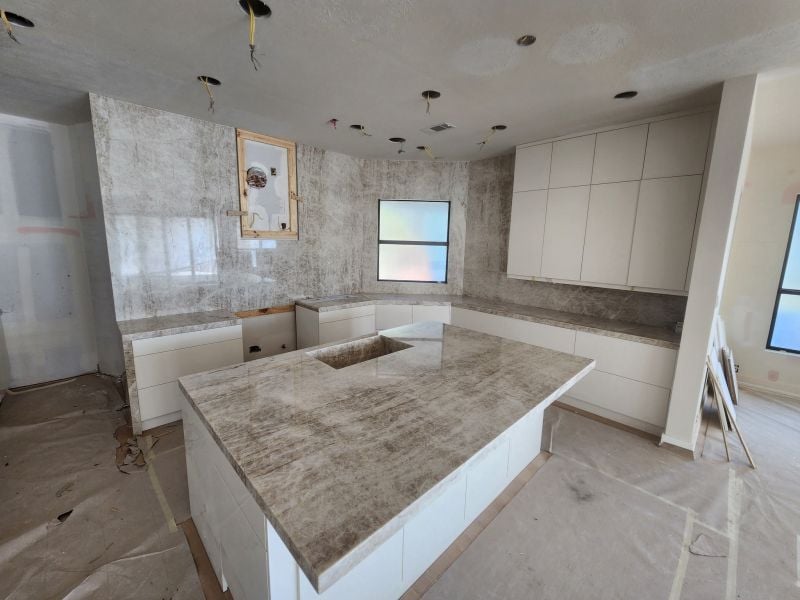
Taj Mahal Quartzite provided by Triton Stone Group and installed by R&D Marble
What to Know About Quartzite Slabs and Fabrication
Quartzite slab fabrication is a precision-driven process that transforms raw natural stone into a custom-fit surface for your home. Each slab must be carefully measured, cut, and finished to match the exact dimensions of your kitchen or bathroom layout. Because quartzite is dense and unforgiving to work with, professionals rely on specialized tools and techniques to ensure accuracy, durability, and a refined final appearance.
Precision Measurement and Digital Templating
Fabricators typically use digital templating to capture exact measurements of your space before any cutting begins. This technology helps ensure the slab fits seamlessly, reduces material waste, and improves installation accuracy. The result is a cleaner layout with fewer adjustments needed on installation day.
Edge Profiles and Finish Options
Before fabrication is finalized, installers usually review edge profiles and finish options with the homeowner. These design choices influence the overall style of the countertop, from soft and modern edges to more detailed, decorative profiles. Selecting the right finish helps align the quartzite slab with the overall design of the space.
Structural Support and Cabinet Reinforcement
Because quartzite is significantly heavier than many other countertop materials, proper cabinet support is essential. Professionals often evaluate and reinforce cabinetry to ensure it can safely carry the load of the stone. This step helps prevent shifting, cracking, or long-term structural issues after installation.
Sealing and Long-Term Protection
Sealing is an important part of protecting quartzite from stains and moisture absorption over time. Installers typically apply a sealant during or after fabrication to enhance durability and preserve the stone’s natural appearance. Regular resealing is also recommended to maintain long-term performance.
Selecting the Right Quartzite Slab
Choosing the right slab involves balancing color, pattern variation, and durability to match your design goals. Since no two quartzite slabs are identical, viewing them in person helps ensure consistency with your vision. The right selection delivers both visual impact and long-lasting functionality in your space.
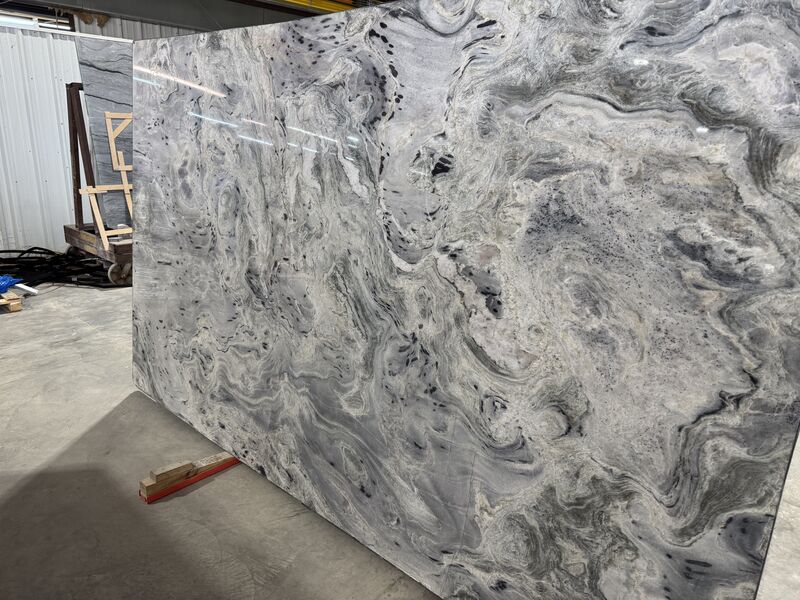
Quartzite slab at R&D Marble’s indoor slab yard
The Installation Process: What Happens on Installation Day
Installation day is when everything comes together, and homeowners finally see their quartzite countertops in place. Installers start by rechecking all measurements to ensure precision before any slabs are set. This step is essential for achieving a clean, accurate fit and avoiding issues during final alignment.
Because quartzite is heavy and delicate to maneuver, professionals use specialized equipment to transport and position each slab safely. Once in place, the stone is secured with high-strength adhesives, and seams are carefully finished to create a smooth, continuous surface that resists moisture and wear.
After installation, a final inspection confirms alignment, stability, and overall finish quality. Homeowners are also given care instructions, including sealing schedules and cleaning guidelines, to help preserve the surface long-term.
Professional Installers and Their Role in the Installation Process
Professional installers are key to a successful quartzite installation because they bring technical expertise and hands-on experience with natural stone. Their work ensures slabs are handled safely, positioned accurately, and secured for long-term durability, reducing the risk of damage or improper fit.
They also manage tools, adhesives, and installation techniques to keep the process efficient and precise. Beyond installation, they answer homeowner questions and provide guidance throughout the project to ensure clarity and confidence at every stage.
Installers also advise on maintenance practices such as sealing and proper cleaning methods. These recommendations help preserve both the strength and appearance of quartzite countertops over time.
Why Homeowners Choose R&D Marble
At R&D Marble, we’ve proudly served homeowners, builders, and remodelers throughout Montgomery County and the Greater Houston area since 1979. Over more than 45 years, we’ve built a reputation for quality craftsmanship, reliable service, and attention to detail. Our experience working with natural stone, quartz, porcelain, and quartzite allows us to recommend the right materials and deliver custom countertops that complement each client’s style, budget, and functional needs.
Every quartzite countertop is fabricated and installed by our experienced, in-house team using advanced CAD technology and precision fabrication techniques. From helping you select the perfect slab in our indoor showroom to completing a professional installation, we manage every step of the process with care. Our goal is to provide a smooth, stress-free experience and create beautiful quartzite countertops that you’ll enjoy for many years to come.
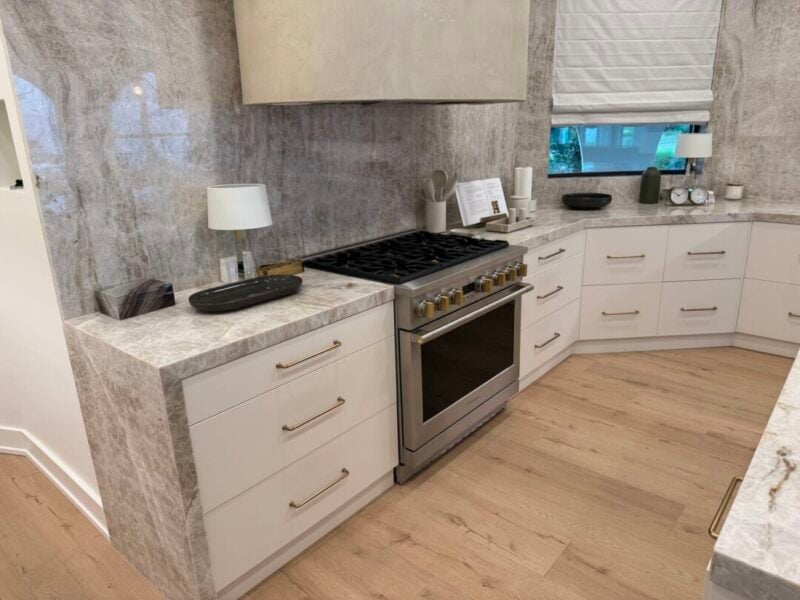
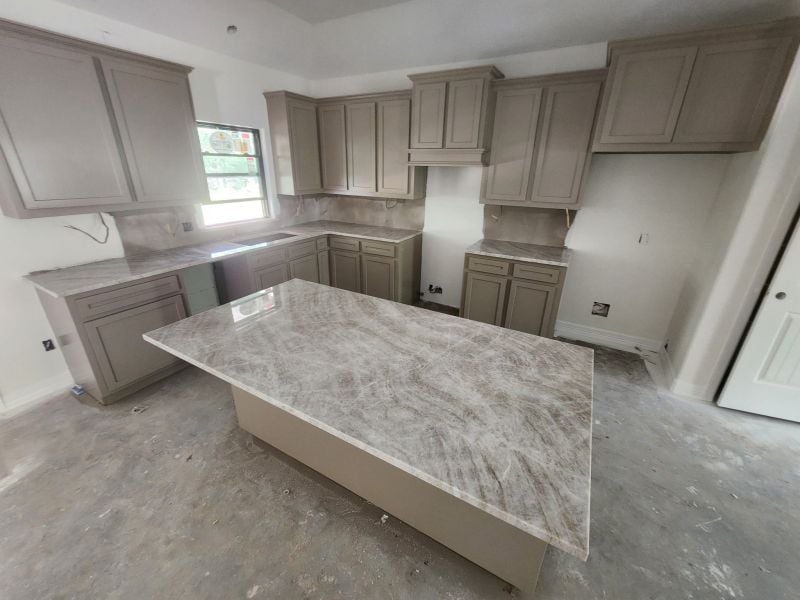
Taj Mahal Quartzite provided by Triton Stone Group and installed by R&D Marble
Quartzite Installation Frequently Asked Questions
How long does a typical quartzite installation take?
Most quartzite installation projects take one to two days once fabrication is complete. The timeline depends on the size of the project, the complexity of the layout, and whether multiple slabs or seams are involved. Additional time may be needed for prep work such as cabinet reinforcement or plumbing disconnection before installation day.
What should I expect during quartzite installation day?
Installation day typically starts with a final site check and verification of measurements before any slabs are placed. Professionals then carefully transport and position each quartzite piece, secure it in place, and finish seams for a smooth, unified appearance. A final inspection is completed to confirm alignment, stability, and overall finish quality.
How is quartzite prepared before it is installed?
Before installation, quartzite slabs are measured using templating systems to ensure a precise fit for your space. The stone is then cut, shaped, and finished in a fabrication facility based on your layout, including sink cutouts, edge profiles, and seam placement. This preparation stage is critical to ensuring a seamless installation process on site.
Do I need to prepare my home before quartzite installation?
Yes, some preparation is required to ensure a smooth installation process. This typically includes clearing the workspace, ensuring cabinetry is structurally sound, and removing existing countertops or disconnecting plumbing if needed. Proper preparation helps installers work efficiently and reduces the risk of delays or damage.
How do professionals ensure quartzite countertops are installed correctly?
Professionals rely on precise measurement tools, specialized handling equipment, and industry-grade adhesives to ensure a secure installation. They also check leveling, seam alignment, and structural stability throughout the process. Final inspections are performed to confirm that the countertop is properly fitted and ready for long-term use.
Quartzite Installation: What to Expect from Start to Finish
Quartzite installation combines careful design selection, precise fabrication, and expert installation to create a durable, high-end surface. Each step, from choosing the slab to final placement, ensures the countertop delivers both performance and visual impact in kitchens and bathrooms.
As quartzite installation professionals in Willis, we guide homeowners through the entire process with a focus on accuracy, structural support, and craftsmanship. Our goal is to deliver countertops that are both beautiful and built to last.
Ready to upgrade your space with quartzite? Contact us to get started with a free estimate.