Choosing the right countertop material can influence the appearance, functionality, and overall design of a space. If you’re looking for a customizable surface with a polished appearance, you may have come across the term cultured stone countertop. But what exactly is cultured stone, and how does it differ from natural stone?
Cultured stone countertops are manufactured surfaces that include products such as cultured marble and cultured granite. These materials are created through specialized manufacturing processes that allow for a range of colors, patterns, finishes, and shapes for residential and commercial applications. From bathroom vanities and shower surfaces to kitchen countertops and other interior spaces, understanding the characteristics and applications of cultured stone can help you determine which option is right for your project.
Key Takeaways
- Cultured stone offers an affordable alternative to natural stone
- Manufacturing allows for customizable colors and patterns
- Durable surfaces require relatively low maintenance
- Suitable for kitchens, bathrooms, and commercial spaces
- Cultured and natural stone differ in cost, appearance, and care
How Cultured Stone Countertops Are Manufactured
Cultured stone countertops are manufactured using cast-polymer processes that combine stone-based fillers, resins, pigments, and other materials to create a customizable surface. Cultured marble uses marble-based material in its composition, while cultured granite uses a different filler to create its characteristic aggregate appearance. The mixture is poured into molds that determine the countertop’s shape, size, and design.
Once molded, a protective gel coat is applied to the surface. This creates a smooth, finished appearance while helping protect the countertop from everyday wear, moisture, and staining. The gel coat also contributes to the low-maintenance qualities associated with many cultured stone surfaces.
The manufacturing process allows both cultured marble and cultured granite to be customized for different projects. Colors, patterns, finishes, shapes, and dimensions can be selected to complement the surrounding space. After the material is molded and finished, it undergoes a curing process that prepares the countertop for fabrication and installation.
By combining specialized materials with controlled manufacturing techniques, cultured stone countertops can provide consistent results and design flexibility for residential and commercial applications.
Key Characteristics of Cultured Stone Countertops
Cultured stone countertops combine customizable designs with practical features that make them suitable for many residential and commercial spaces. Both cultured marble and cultured granite can offer smooth, finished surfaces with a range of colors and patterns to complement different interiors. Their specific characteristics can vary by product, but cultured stone surfaces are generally designed for durability, easy maintenance, and everyday use. Key characteristics of cultured stone countertops include:
- Consistent appearance: Manufactured surfaces provide greater consistency in color, pattern, and finish
- Easy maintenance: Smooth surfaces can simplify routine cleaning and upkeep
- Design flexibility: Cultured marble and cultured granite are available in various colors, patterns, and finishes
- Protective finish: A gel coat provides a smooth surface while helping protect against everyday moisture and wear
- Custom fabrication: Countertops can be molded and fabricated to accommodate specific dimensions, shapes, and applications
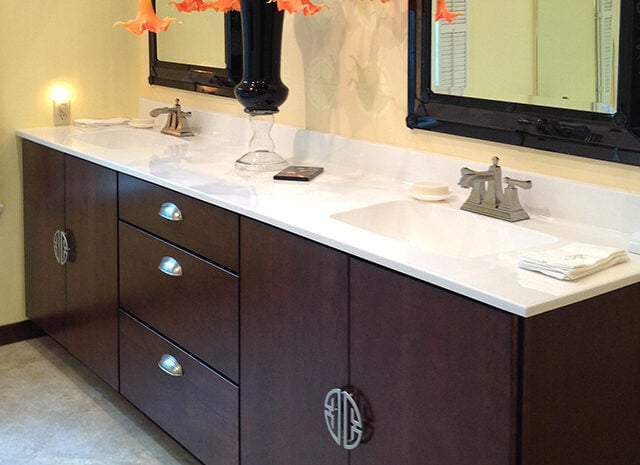
- Versatile applications: Suitable for countertops, vanities, sinks, shower surfaces, tubs, and other interior spaces
Comparing Cultured Stone to Natural Stone
Cultured stone and natural stone offer different approaches to achieving the look and functionality of a stone countertop. Cultured stone countertops, including cultured marble and cultured granite, are manufactured to provide consistent designs and customizable options, while natural stone is formed through geological processes and has naturally occurring variations. Comparing composition, appearance, maintenance, customization, and fabrication can help you understand which type of material aligns with your project requirements.
| Characteristic | Cultured Stone | Natural Stone |
| Composition | Manufactured using stone-based fillers, resins, pigments, and other materials | Naturally formed stone quarried from the earth |
| Material Options | Includes products such as cultured marble and cultured granite | Includes materials such as natural marble and natural granite |
| Appearance | Consistent colors, patterns, and finishes with customizable options | Natural variations in color, pattern, veining, and aggregate |
| Customization | Can be manufactured in various colors, patterns, shapes, and dimensions | Design choices depend largely on the characteristics of the selected stone |
| Maintenance | Generally offers straightforward routine cleaning and maintenance | Maintenance requirements vary by stone and may include periodic sealing |
| Surface | Many cultured stone products feature a smooth, finished surface designed for everyday use | Surface characteristics vary depending on the type of natural stone |
| Fabrication | Can be molded and fabricated to specific shapes, dimensions, and applications | Cut and fabricated from natural stone slabs |
| Best suited for | Projects seeking design consistency, customization, and a manufactured stone appearance | Projects where natural variation and the distinctive characteristics of genuine stone are desired |
Exploring the Benefits of Cultured Stone Countertops
Cultured stone countertops combine practical performance with design flexibility, making them suitable for a variety of residential and commercial spaces. Products such as cultured marble and cultured granite offer customizable colors, patterns, and finishes that can complement different interior styles. Depending on the specific product and application, cultured stone can also provide a practical surface that is relatively easy to maintain and designed for regular use. Some of the key benefits of cultured stone countertops include:
- Easy maintenance: Smooth, finished surfaces can simplify routine cleaning and upkeep
- Design flexibility: Cultured marble and cultured granite are available in a variety of colors, patterns, and finishes
- Customization: Manufactured surfaces can be molded and fabricated to suit specific dimensions, shapes, and applications
- Durability: Cultured stone products are designed to withstand regular everyday use when properly maintained
- Versatile applications: Suitable for countertops, bathroom vanities, shower surfaces, tub surrounds, and other residential or commercial applications
- Consistent appearance: Controlled manufacturing allows for greater consistency in color, pattern, and finish compared with naturally formed stone
Common Applications for Cultured Stone in Residential and Commercial Spaces
Cultured stone can be used throughout residential and commercial spaces where a customizable, finished surface is needed. Products such as cultured marble and cultured granite can be fabricated for different applications, with the appropriate material selected based on the space, design, and performance requirements. From bathroom surfaces and kitchen countertops to commercial facilities, cultured stone offers versatility across a range of interior applications.
| Application | How Cultured Stone Is Used | Key Advantages |
| Bathroom vanities | Used for vanity tops, sinks, and surrounding surfaces | Easy maintenance, customizable appearance, cohesive design |
| Shower surrounds | Installed as wall panels or surrounding surfaces in showers | Moisture resistance, low maintenance, seamless appearance |
| Tub decks | Used around freestanding or built-in tubs | Customizable design, smooth surface, moisture resistance |
| Kitchen countertops | Provides a finished work surface for food preparation and everyday use | Design flexibility, easy maintenance, finished appearance |
| Laundry rooms | Used for countertops and utility work surfaces | Practical, durable, and easy to clean |
| Commercial bathrooms | Used for vanities, sinks, and other bathroom surfaces | Professional appearance, practical maintenance, design flexibility |
| Office and retail spaces | Used for countertops and other interior surfaces | Customizable appearance and versatile design options |
| Hospitality spaces | Used for bathroom surfaces, vanities, and other guest-facing applications | Polished appearance, design consistency, and easy upkeep |
Cultured Stone Countertop Questions
Can cultured stone countertops be repaired if they are damaged?
Minor damage to a cultured stone countertop may be repairable depending on the type and extent of the damage. A professional can evaluate the surface and determine whether repair, refinishing, or replacement is the most appropriate option.
Can cultured stone countertops be made with integrated sinks or backsplashes?
Yes, certain cultured stone products can be fabricated with integrated features such as sinks and backsplashes. These options can create a more seamless appearance while reducing visible seams and making the surface easier to maintain.
Can cultured stone countertops be used around bathroom sinks and tubs?
Cultured stone can be suitable for many bathroom applications, including vanity tops and surfaces around sinks or tubs. The appropriate product and fabrication method should be selected based on the location, moisture exposure, and intended use.
How are cultured stone countertops cleaned?
Cleaning requirements can vary depending on the specific cultured stone product and its finish. Following the manufacturer’s care recommendations and using appropriate non-abrasive cleaning products can help maintain the surface and protect its finish.
Can cultured stone countertops be customized for unusual spaces?
Many cultured stone products can be fabricated to accommodate specific dimensions, layouts, and design requirements. Professional fabrication can help create a countertop that fits around walls, corners, sinks, fixtures, and other features within a space.
Choosing a Cultured Stone Countertop
Choosing a cultured stone countertop depends on your design preferences, functional needs, and the space where the surface will be installed. Cultured stone can provide a consistent appearance, customizable design options, and practical performance for bathrooms, kitchens, vanities, and other residential or commercial applications. By understanding how these surfaces are made and where they work best, you can select a countertop solution that complements your project.
As a trusted stone surface provider in Willis, we help homeowners, builders, and businesses explore quality countertop materials for their projects. From selecting the right material and design to professional fabrication and installation, our team provides personalized guidance to help bring your vision together.
Ready to explore cultured stone countertop options for your project? Contact us today to discuss your needs and learn more about our countertop solutions.