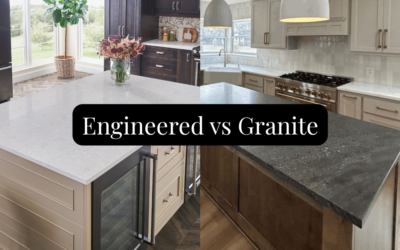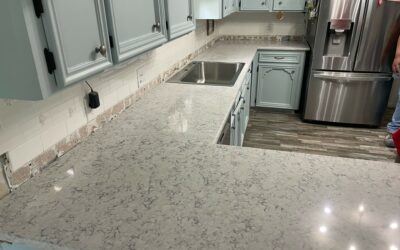
Step into a newly renovated kitchen where every detail feels intentional. Sunlight reflects off smooth surfaces, the space feels open and refined, and even the smallest design choices make a noticeable impact. One of those choices is countertop thickness, which quietly shapes both the look and performance of the kitchen.
Countertop thickness influences style, durability, and overall feel. Standard options range from slimmer profiles that create a clean, modern appearance to thicker slabs that add weight and a more substantial presence. Each option contributes differently to the design direction of the space.
The right thickness also affects everyday function. Thicker countertops often offer added durability and a more premium look, while thinner styles support a lighter, more minimalist aesthetic. Choosing between them comes down to how the kitchen is used and the overall design goals.
Key Takeaways
- Countertop thickness options can range from 1cm to 4cm, depending on the material and application
- Thinner slabs create a sleek, modern look, while thicker slabs make a bolder design statement
- The right thickness depends on your style preferences, budget, and how the space will be used
- Different countertop materials may be available in different thickness options
- Choosing the right thickness can improve both the appearance and functionality of your countertops
Exploring Standard Countertop Thickness Options
When selecting a countertop, thickness plays an important role in both appearance and performance. Common countertop thicknesses include 1cm, 2cm, 3cm, and 4cm options, depending on the material and application. While thinner profiles create a sleek, modern look, thicker slabs provide greater visual impact and a more substantial feel, making thickness an important consideration for both style and functionality.
| Thickness | Appearance | Best For | Key Benefits | Considerations |
| 1cm | Slim, modern, minimalist | Accent surfaces, backsplashes, wall applications | Lightweight, cost-effective, sleek aesthetic | May require added support and is less common for primary countertops |
| 2cm | Balanced, refined, versatile | Modern and transitional kitchen designs | Good balance of strength and style | May require edge build-up for a thicker appearance |
| 3cm | Bold, substantial, premium | High-traffic kitchens and everyday use | Excellent durability and a high-end look | Heavier material can increase installation costs |
| 4cm | Dramatic, luxurious, statement-making | Large islands, luxury kitchens, custom designs | Maximum visual impact, enhanced durability, premium appearance | Higher material costs and additional structural support may be required |
Choosing the Right Thickness for Your Home Design
Selecting countertop thickness becomes much simpler when you break the decision into a few key factors. Start with your kitchen’s overall style, since design direction often sets the baseline. Modern spaces typically align with slimmer 2cm profiles for a clean, streamlined look, while more traditional kitchens often benefit from the visual weight and presence of 3cm slabs.
Next, consider how the kitchen will actually be used day to day. High-traffic cooking spaces or homes with frequent use tend to benefit from thicker, more robust surfaces, while lighter-use kitchens may prioritize a more minimal aesthetic over added bulk. Material selection also plays a role here, since some surfaces naturally perform better at certain thicknesses.
Finally, think about the balance between appearance, durability, and installation requirements as one complete system. The right choice is the one that supports your design vision while still performing well under real-world conditions. When these factors work together, countertop thickness becomes less of a technical decision and more of a cohesive design choice that enhances the entire kitchen.
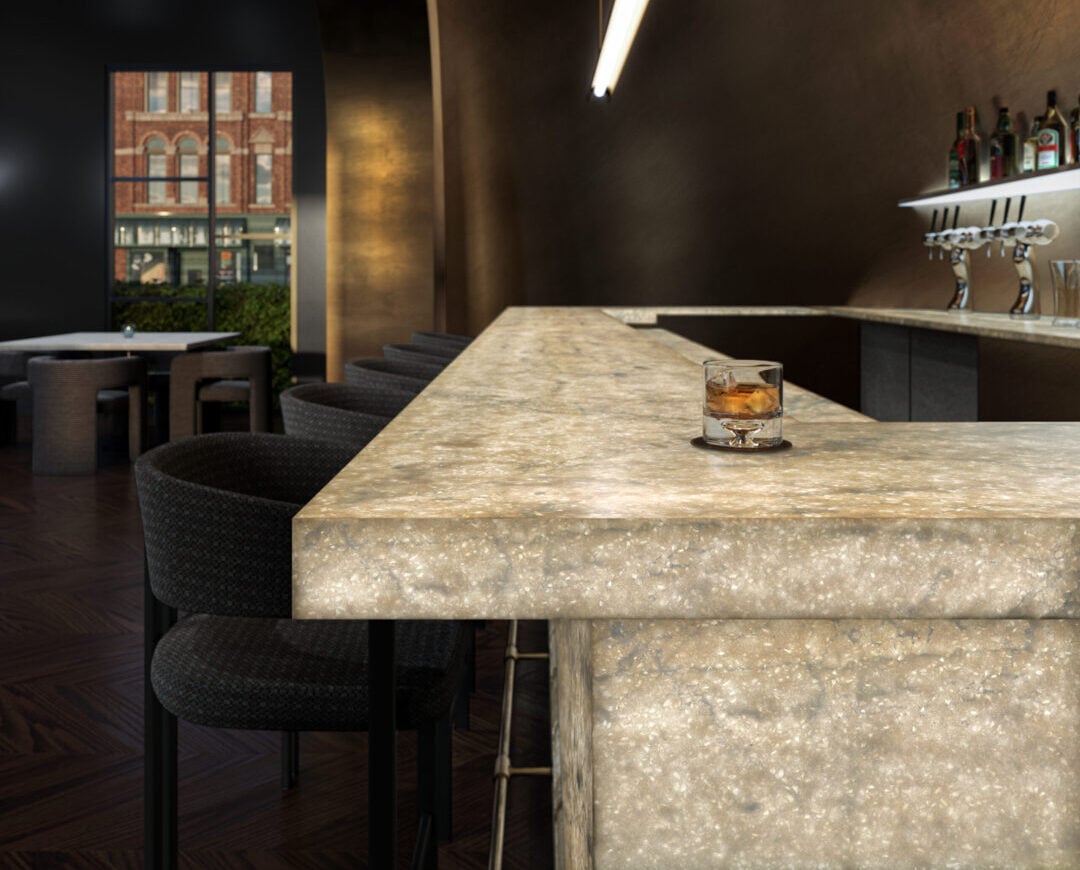
Brighton Cambria Quartz Bar Photo by Carter Dodd
Common Stone Countertop Materials and Thickness Considerations
Different countertop materials offer unique strengths, appearances, and fabrication requirements, which often influence how thickness is selected. While most natural and engineered stones are available in standard slab profiles, their weight, durability, and installation needs can vary significantly. Understanding how each material performs helps narrow down the best fit for both style and long-term functionality.
| Material | Appearance | Durability | Best Use Cases | Key Considerations |
| Porcelain | Sleek, uniform, modern | Very high; resistant to heat, stains, and scratches | Contemporary kitchens, waterfall edges, outdoor applications | Lightweight but brittle; requires expert fabrication and installation |
| Granite | Natural, varied patterns | High; strong and heat resistant | High-traffic kitchens, traditional and transitional designs | Needs periodic sealing; heavy material |
| Quartzite | Natural stone with marble-like look | Very high; harder than granite in many cases | Luxury kitchens, durable natural stone applications | Requires sealing; can be more expensive and harder to source |
| Marble | Elegant, classic veining | Moderate; softer and more prone to etching | Low-traffic kitchens, bathrooms, decorative spaces | Requires frequent maintenance and sealing |
| Quartz | Consistent, engineered appearance | High; non-porous and low maintenance | Modern kitchens, family homes, commercial spaces | Not as heat resistant as natural stone; can discolor with high heat exposure |
The Pros and Cons of Different Countertop Thicknesses
Choosing the right countertop thickness comes down to balancing appearance, durability, installation requirements, and budget. Each thickness option offers unique benefits, making it important to consider how the countertop will look, perform, and fit into your overall design.
1cm Countertops
Pros:
- Lightweight and budget-friendly
- Clean, minimalist appearance
- Ideal for backsplashes and decorative applications
Cons:
- Often requires additional support
- Less suitable for high-use countertop surfaces
- Limited structural strength compared to thicker slabs
2cm Countertops
Pros:
- Sleek, modern profile
- Good balance of style and functionality
- Easier to handle and install than thicker slabs
Cons:
- May require edge build-up for a thicker appearance
- Less substantial than thicker options
- Some applications may need additional support
3cm Countertops
Pros:
- Excellent durability for everyday use
- Premium, substantial appearance
- Typically does not require edge build-up
Cons:
- Higher material and installation costs
- Heavier weight may increase installation complexity
- Not always necessary for lower-traffic spaces
4cm Countertops
Pros:
- Maximum visual impact and luxury appeal
- Exceptional durability and strength
- Creates a bold statement on large islands and focal areas
Cons:
- Highest material and fabrication costs
- Significant weight may require additional structural support
- May appear too heavy for some modern or minimalist designs
Maintenance Considerations
Countertop thickness can influence long-term performance, but maintenance requirements are also affected by the material itself. Thicker slabs generally provide greater resistance to impacts and everyday wear, making them a strong choice for busy households. However, proper care, sealing requirements, and cleaning routines will ultimately depend on whether you choose materials such as granite, marble, quartzite, quartz, or porcelain.
Tips from Countertop Experts on Selecting Thickness
Selecting countertop thickness can feel overwhelming, but experts recommend focusing on a few practical steps to simplify the decision. Visiting a showroom is one of the best ways to compare thickness options in person and understand how each one looks and feels in real applications. This hands-on experience often makes the decision much clearer.
Design professionals also emphasize overall kitchen balance. The countertop should support the design, not overpower it, so thickness should complement cabinetry, backsplash, and flooring choices. Fabricators add another layer of insight by explaining structural requirements and installation considerations, helping avoid unexpected issues during installation.
Lifestyle is another key factor in the decision. Busy households may benefit from thicker, more durable surfaces, while design-focused projects may lean toward thinner, more streamlined profiles. Local specialists can also provide guidance based on regional design trends and material availability.
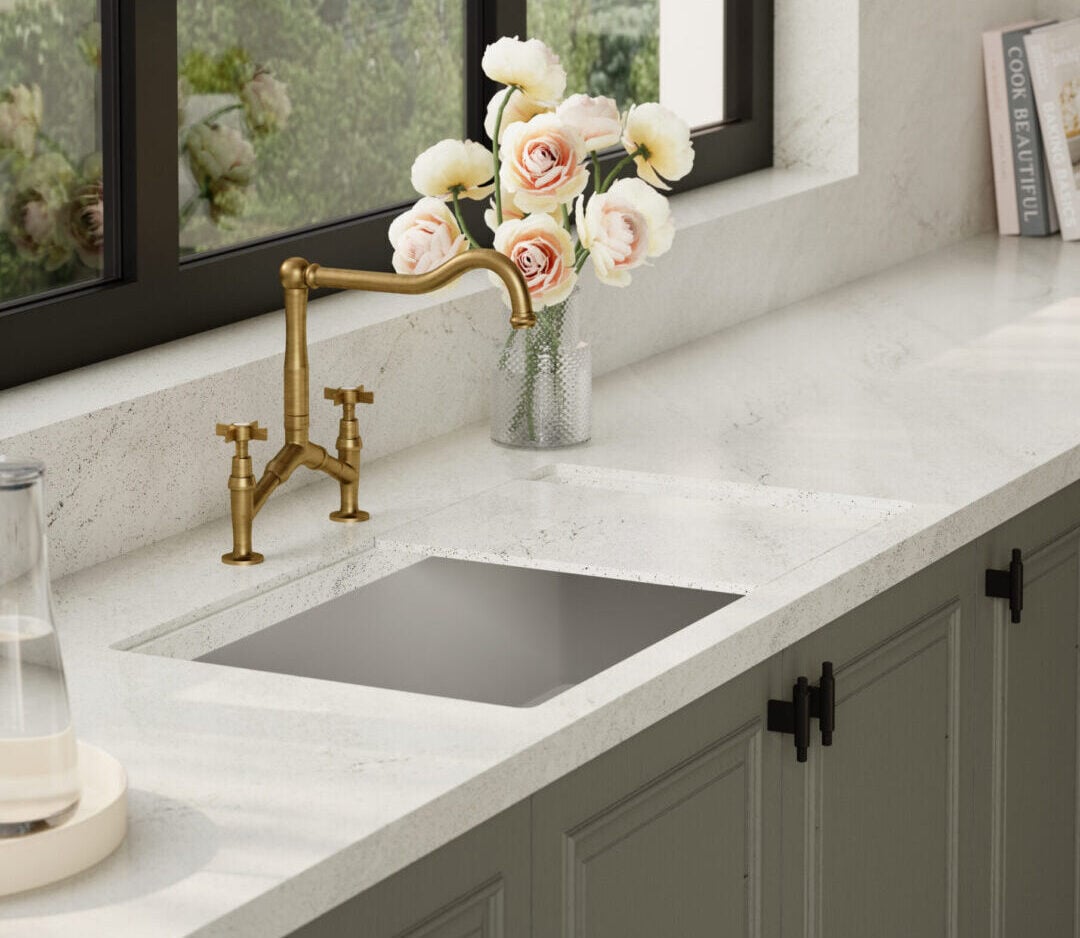
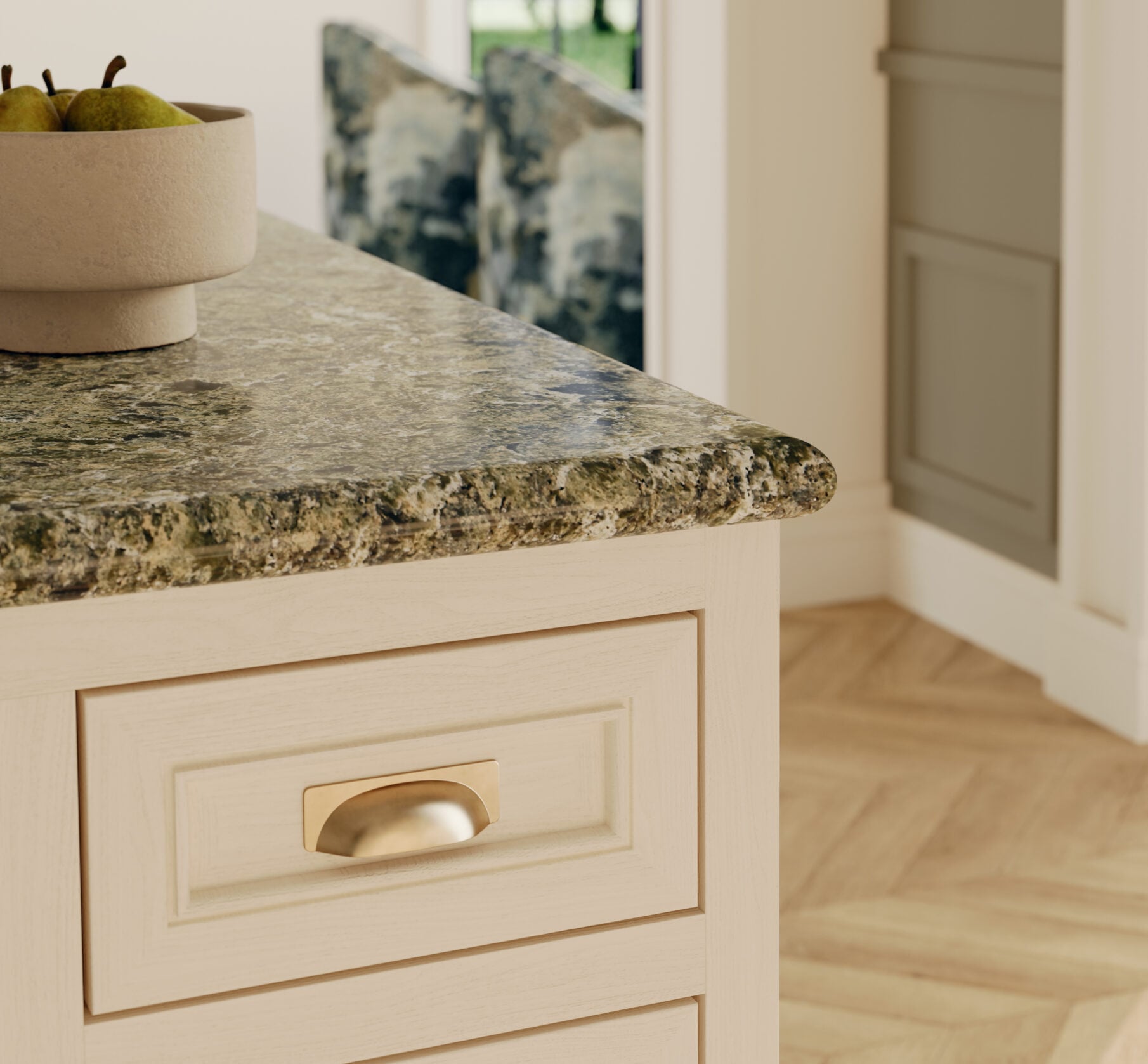
Traymore Bay Cambria Quartz Kitchen Countertop Photo by Carter Dodd
Why Homeowners Choose R&D Marble
At R&D Marble, you get a complete, start-to-finish stone countertop experience backed by decades of craftsmanship. You have access to a wide selection of natural stone, quartz, and porcelain materials, along with the opportunity to view full slabs in person at our on-site slab yard. This makes it easier for you to choose the right material and thickness with confidence before fabrication begins.
Beyond material selection, we manage the entire process in-house, from CAD-designed layouts to precision fabrication and installation. This controlled workflow ensures accuracy, consistency, and high-quality results on every project. With experienced installers and a long-standing reputation in Montgomery County, R&D Marble delivers a streamlined experience and durable, professionally crafted surfaces you can rely on.
Countertop Thickness FAQs
What countertop thickness is most commonly used in residential kitchens?
Most residential kitchens use either 2cm or 3cm slab thicknesses depending on the material and design goals. The 3cm option is especially common for granite and quartz because it provides a solid, finished edge without additional build-up. Meanwhile, 2cm slabs are often used in more modern designs where a lighter visual profile is preferred.
How does countertop thickness affect installation and structural support?
Thickness plays a direct role in how a countertop is supported during installation. Thinner slabs often require additional reinforcement, such as plywood backing or edge build-ups, to ensure stability. Thicker slabs are generally more self-supporting, but they can require stronger cabinetry due to increased weight.
Does countertop thickness impact the overall cost of a project?
Yes, thickness can influence both material and installation costs. Thicker slabs typically use more raw material and may require more labor to handle and install, which can increase the overall project price. Thinner options may reduce material costs but can add expenses in reinforcement or fabrication details.
Are thicker countertops always more durable than thinner ones?
Not necessarily, as durability also depends on the material itself and how it is installed. A high-quality engineered surface like quartz can perform very well even at thinner profiles when properly supported. However, thicker slabs often provide more impact resistance and a more substantial feel in high-use areas.
Can countertop thickness be customized for specific design features like waterfall edges or islands?
Yes, thickness is often adjusted or visually enhanced for design features such as waterfall edges and kitchen islands. In some cases, thinner slabs are built up to create the appearance of a thicker profile for aesthetic consistency. This allows designers to balance visual impact with structural and budget considerations.
Choose the Right Countertop Thickness for Your Kitchen
Choosing the right countertop thickness is an important step in creating a kitchen that feels balanced, functional, and visually aligned with your design goals. From the streamlined look of thinner slabs to the bold, substantial presence of thicker options, each choice offers its own combination of style, durability, and practicality. Understanding how thickness impacts both performance and appearance helps you select a surface that fits the way you live and use your space.
As countertop fabrication and installation specialists serving Montgomery County and surrounding areas, we help homeowners select materials and thickness options that match their design vision and everyday needs. From modern, minimal profiles to more traditional, high-end finishes, every project is tailored to deliver long-lasting performance and a polished, cohesive look.
Ready to upgrade your kitchen with the right countertop thickness for your home? Contact us today to explore material options and request a free estimate.